How Real-Time Alerts Improve Search Success
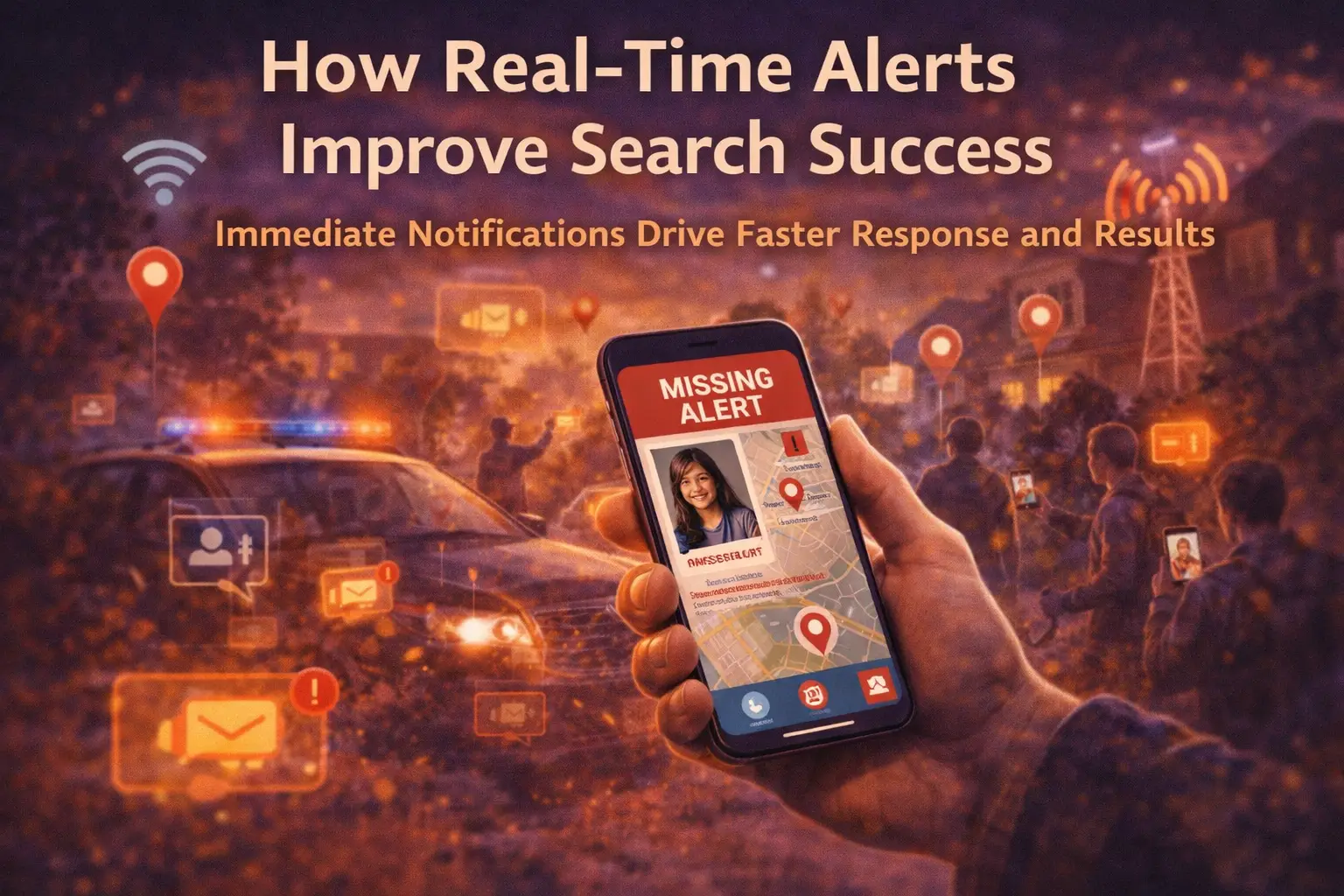
When seconds decide outcomes
Missing person. How real-time alerts improve search success becomes clear immediately. A disappearance creates urgency instantly. Time begins working against safety. Delays increase distance and risk. Early action defines outcomes. Speed changes everything. How real-time alerts improve search success becomes visible instantly. A phone vibrates nearby. A notification appears immediately. Information reaches thousands within seconds. Faces become visible across neighborhoods. Locations spread without delay. Awareness expands faster than movement.
Why Speed Matters in How Real-Time Alerts Improve Search Success
Search success depends on early visibility. Witnesses remember details best immediately. Surveillance footage remains available briefly. Movement patterns stay predictable early. Delays erase opportunities quickly.
Real-Time Alerts in Early Search
How real-time alerts improve search success relies on instant distribution. Information travels faster than physical movement. Alerts reach drivers, workers, and pedestrians. Each person becomes a potential witness. Coverage expands without delay.
Alerts turn bystanders into responders
Ordinary people notice unusual details quickly. A person walking alone stands out. A parked vehicle raises attention. Alerts guide focus toward relevance. A simple glance becomes critical.
Location targeting increases accuracy
Modern alerts use geographic precision. Messages reach people in specific areas. Nearby witnesses receive alerts first. Focus improves useful reporting. Precision reduces noise.
Digital networks amplify reach instantly
Social platforms spread alerts rapidly. Shares multiply visibility immediately. Community groups respond quickly. Information crosses cities and regions. Networks remove isolation completely.
Real-time alerts reduce search radius
Early sightings define movement direction. Investigators adjust zones quickly. Resources focus on smaller areas. Efficiency improves with accurate leads.
Coordination strengthens response speed
Police departments share alerts immediately. State systems connect across regions. Federal networks expand reach further. Coordination removes communication delays.
Mobile technology keeps alerts active
Smartphones deliver updates continuously. Notifications appear anywhere instantly. Drivers receive alerts while traveling. Pedestrians remain informed constantly.
Why timing protects lives
First hours remain critical always. Early alerts prevent long-distance movement. Immediate awareness blocks escape paths. Rapid response increases recovery chances.
The importance of clear information
Accurate descriptions guide recognition. Clear photos support identification. Specific locations improve response quality. Consistency prevents confusion.
Mistakes that weaken alerts
Delayed alerts reduce effectiveness significantly. Incomplete descriptions confuse witnesses. Unverified information spreads distraction. Clarity must remain priority.
Community participation drives success
People respond when urgency feels real. Visibility motivates immediate action. Shared responsibility creates momentum. Collective awareness increases results.
The future of real-time alerts
Technology continues improving alert systems. Faster networks expand reach. Smarter targeting improves accuracy. Real-time data transforms search strategy.