
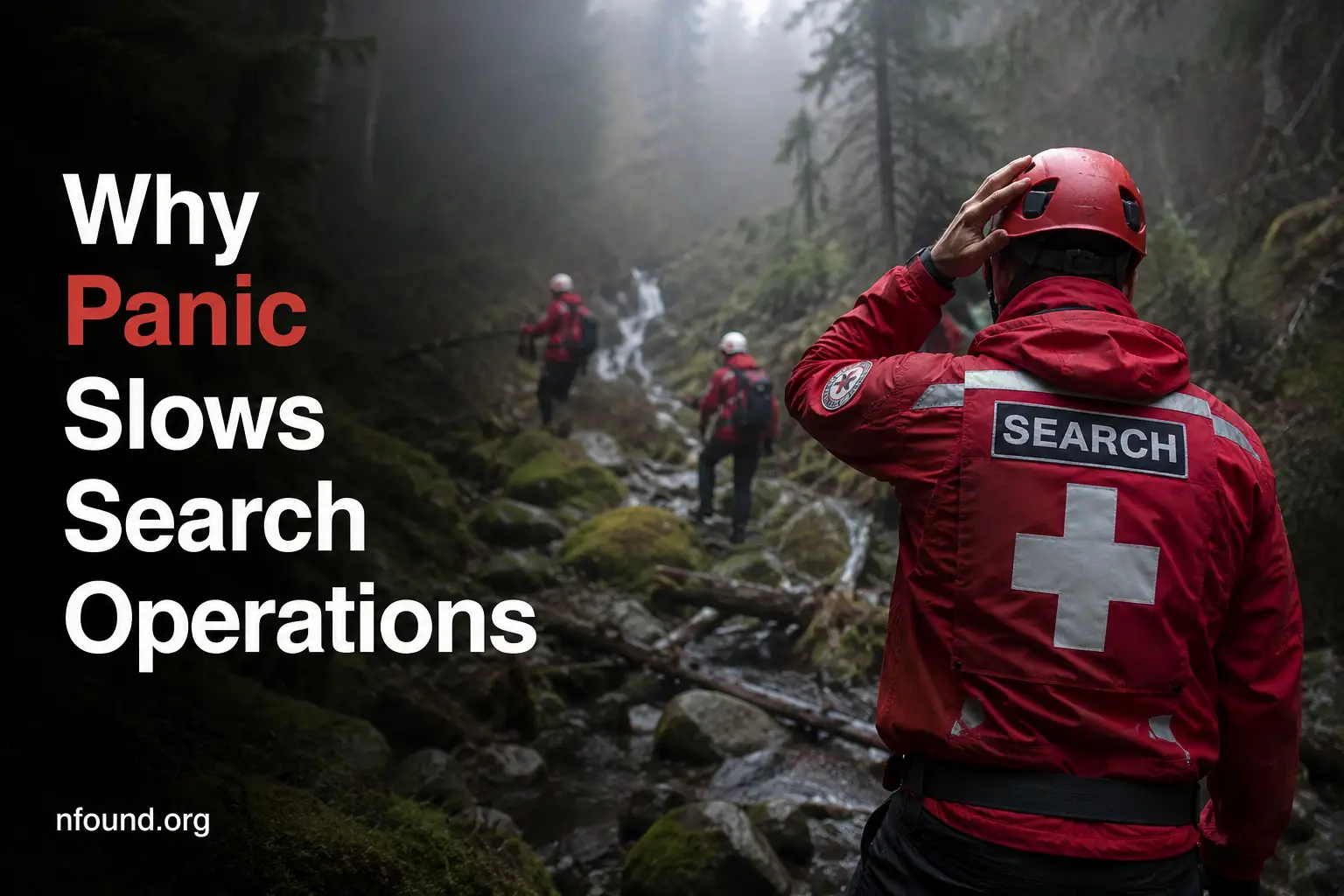
When fear replaces structure
Missing person. Why Panic Slows Search Operations becomes clear immediately. A person goes missing suddenly. Emotions rise across families and communities. Fear spreads faster than information. People react before thinking clearly. Search efforts lose coordination quickly.
Why Panic Slows Search Operations: the hidden damage
Panic breaks communication instantly. People ignore instructions under stress. Teams move without coordination. Important details become harder to track. Confusion replaces structure quickly.
Panic creates communication overload
Too many voices create noise rapidly. Calls and messages multiply constantly. Important information disappears inside overload. Coordinators struggle separating facts from emotion.
Emotional reactions reduce accuracy
Fear affects memory and judgment. Witnesses may confuse details unintentionally. Rumors spread without verification. Incorrect information wastes valuable time.
Panic destroys organized movement
Search operations require controlled coverage. Panic creates random searching instead. Volunteers abandon assigned sectors. Overlap increases quickly. Important areas remain unchecked.
Why calm communication matters
Clear instructions improve coordination immediately. Calm voices reduce confusion. Structured communication guides effective action. Simplicity improves understanding.
Families experience overwhelming pressure
Waiting creates emotional exhaustion quickly. Panic feels natural during uncertainty. Families need stable communication. Controlled support improves decision-making.
Social media amplifies panic
Emotional posts spread rapidly online. Speculation gains attention quickly. False sightings redirect search efforts. Visibility becomes chaotic instead of useful.
Leadership becomes critical during crisis
Strong leadership restores structure. Coordinators guide volunteers effectively. Organized systems reduce emotional reactions. Confidence improves teamwork.
Why timing matters
First hours shape search outcomes. Panic wastes critical time. Calm coordination improves efficiency immediately. Structured action protects momentum.
Volunteers need clear direction
Volunteers want to help quickly. Without guidance, effort becomes disorganized. Defined roles improve effectiveness. Coordination increases coverage quality.
The danger of impulsive decisions
People often act without planning. Independent searching creates risk. Quick emotional decisions damage operations. Structure prevents unnecessary mistakes.
Calm improves observation
Focused people notice details better. Calm minds process information accurately. Attention improves during structured searches. Clarity increases recognition.
Why preparation reduces panic
Prepared systems create stability. Emergency plans guide early response. Training improves emotional control. Structure limits chaos.
Conclusion
Why panic slows search operations reflects the importance of control. Fear disrupts communication and coordination quickly. Calm action protects search effectiveness. Structured response saves valuable time. Every decision affects outcomes.
#abduction #abuse #America #donate #found #global issue #gps tracking #human trafficking #kidnapping #lost #Lost cat #lost dog #Missing Kids #missing people #nfound #nonprofit organizations