
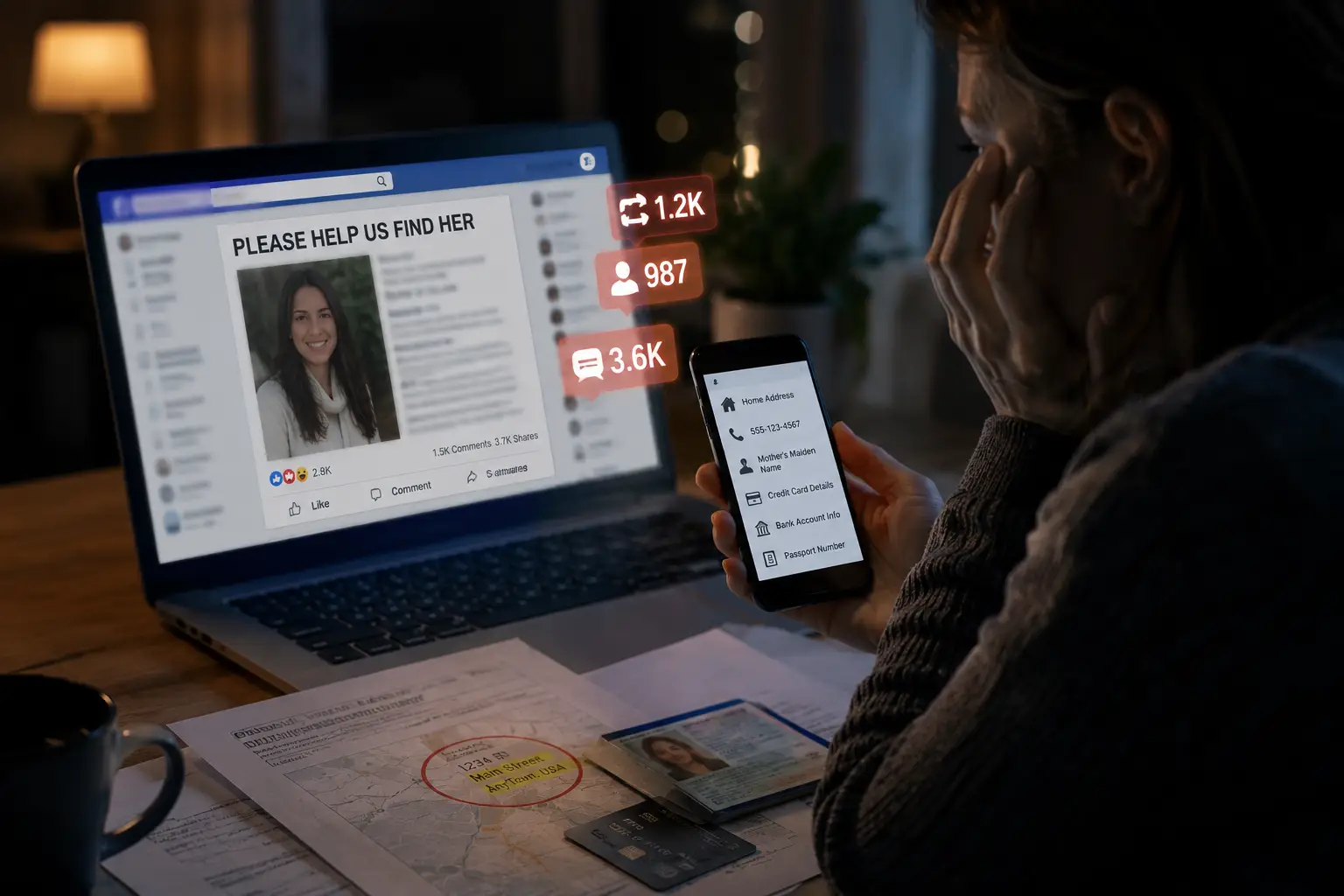
When visibility creates unexpected risks
A person goes missing suddenly. Information should never be shared publicly without careful consideration. Families seek help immediately. Information spreads across communities quickly. Social media amplifies every update. Public awareness supports search efforts. Excessive sharing creates danger instead. Some details help searches. Others create serious risks.
What Information Should Never Be Shared Publicly: protecting safety first
What information should never be shared publicly becomes important during crisis. Not every detail belongs online. Some information attracts scammers. Other details compromise investigations. Public posts must balance visibility and protection.
Personal contact information creates vulnerability
Families often share phone numbers widely. Public exposure attracts unwanted calls. Scammers target emotional situations quickly. Harassment becomes possible. Official contact channels reduce risk significantly.
Financial information should remain private
Searches sometimes involve fundraising efforts. Bank details never belong in public posts. Payment information attracts fraud immediately. Secure platforms provide safer alternatives.
Exact home addresses create security concerns
Addresses expose families unnecessarily. Strangers gain direct access. Privacy disappears quickly. General locations support awareness better. Specific addresses increase risk.
Sensitive medical details require caution
Medical information feels relevant sometimes. Public exposure affects privacy permanently. Health details should remain limited. Share only essential information.
Investigation details should stay protected
Authorities gather evidence carefully. Public disclosure may compromise progress. Witness statements require verification. Sensitive details belong with investigators.
Unverified sightings cause confusion
People share possible sightings quickly. Many reports remain unconfirmed. False information redirects resources. Verification must come first.
Private family conflicts should remain private
Personal disputes rarely assist searches. Public discussions create distractions. Focus must remain on recovery efforts. Unrelated details increase confusion.
Location tracking information creates risks
Live locations reveal movement patterns. Search teams require operational privacy. Public tracking may interfere with coordination. Controlled sharing works better.
Photos of identification documents
Some families post official documents. Identification numbers create security risks. Personal records attract fraud. Documents should stay private.
Why scammers look for information
Scammers search public posts actively. They collect useful details quickly. Personal information supports manipulation. Limited sharing reduces opportunity.
Social media requires careful judgment
Every post reaches unknown audiences. Information spreads beyond intended circles. Deleting content rarely removes exposure. Thoughtful sharing protects everyone.
What information actually helps
Clear photos improve recognition. Physical descriptions support identification. Last known locations provide direction. Verified facts strengthen awareness.
Conclusion
What information should never be shared publicly protects families and investigations. Privacy remains important during crisis. Excessive sharing creates unnecessary risks. Careful communication improves safety. Visibility helps searches. Protected information prevents harm.