
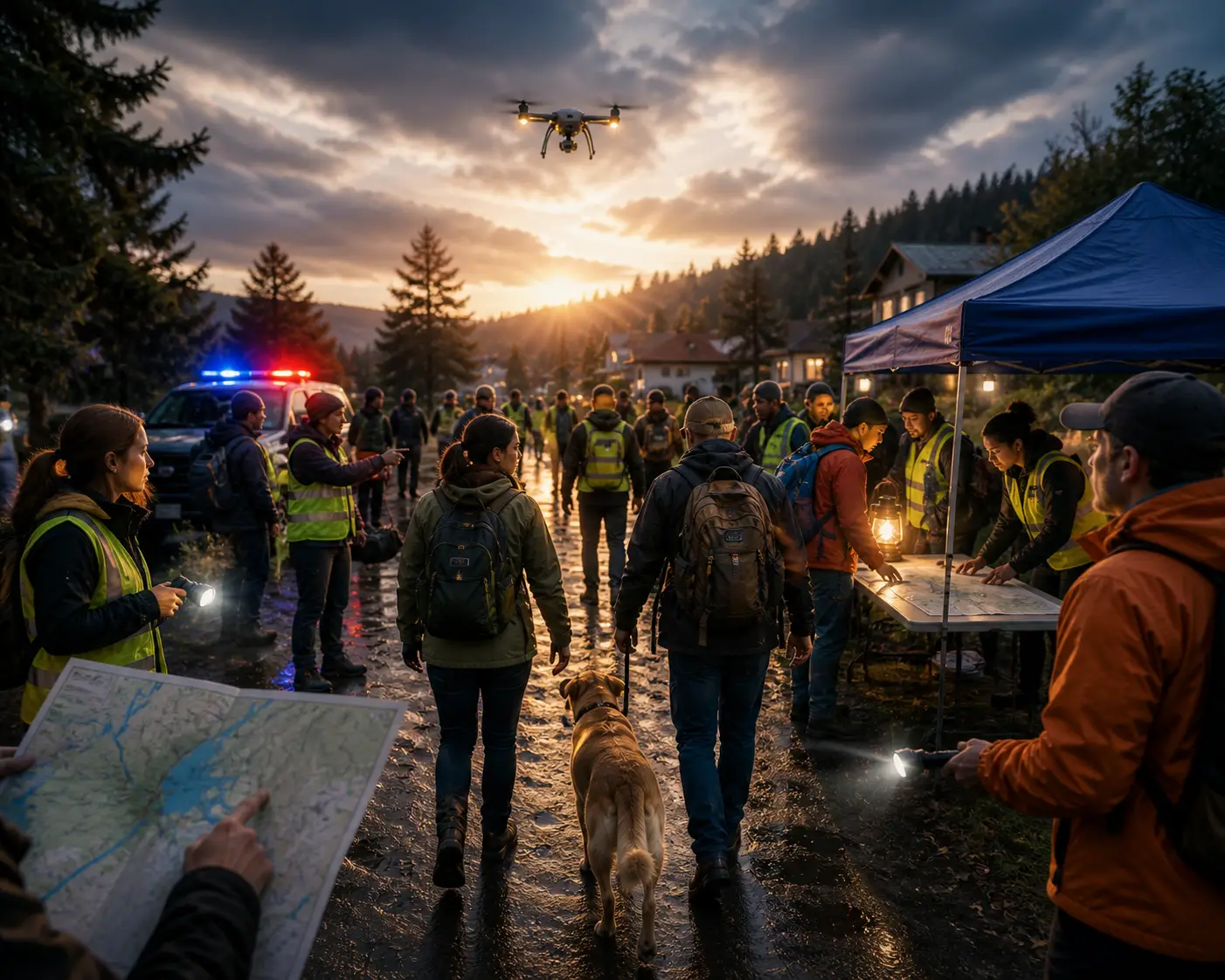
When strangers decide to act
A person goes missing suddenly. News spreads through streets and screens. Strangers stop their routines. They step into uncertainty together. Action replaces distance quickly.
Why People Help in Search Efforts: the emotional connection
Why people help in search efforts often begins with empathy. People imagine their own family missing. That thought creates urgency instantly. Compassion drives movement forward. Emotional connection becomes real action.
A sense of shared responsibility
Many feel responsible for community safety. They refuse to stay passive. Helping feels like a duty. Responsibility pushes people into action.
The need to make a difference
Search efforts offer visible impact. Every step may bring answers closer. That possibility motivates strongly. Meaningful action creates deep engagement.
Community identity and belonging
People protect familiar places instinctively. Neighborhoods feel personal and important. Local identity drives involvement. Shared space creates collective responsibility.
Urgency creates movement
Time pressure pushes quick decisions. Delay feels unacceptable during crisis. People act before hesitation grows. Urgency fuels participation.
Influence of others
Seeing others join builds momentum. Action spreads quickly through groups. Participation becomes contagious. Social proof strengthens involvement.
Past experiences shape behavior
Previous events influence current choices. Some helped before in similar cases. Others remember past losses. Experience reduces hesitation.
Leadership builds trust
Clear direction attracts volunteers. Organized efforts feel reliable. Structure creates confidence. People join when systems work.
Desire for purpose
Search efforts give strong meaning. People seek purposeful action. Crisis provides direction. Purpose keeps volunteers engaged.
Recognition and appreciation
Acknowledgment reinforces participation. Gratitude strengthens commitment. Volunteers feel valued through recognition.
Learning through action
Volunteers gain practical experience. Skills develop during real situations. Growth motivates continued involvement.
Overcoming fear through action
Fear exists in uncertain situations. Action reduces that fear. Movement creates confidence. Courage grows during participation.
Why motivation matters
Understanding motivation improves coordination. Better systems attract more participants. Strong engagement increases effectiveness.
Conclusion
Why people help in search efforts reflects empathy and purpose. People act when connection feels real. Collective effort creates real impact. Every action brings answers closer.
#abduction #abuse #America #California #donate #Florida #found #global issue #gps tracking #human trafficking #kidnapping #lost #Missing Kids #missing people #nfound #nonprofit organizations #Sexual slavery