When a safe home suddenly feels far away
Missing pets. A door opens for seconds. A delivery arrives unexpectedly. A curious cat notices movement. One quiet step changes everything. Familiar walls disappear quickly. A safe home becomes distant.
Why Indoor Cats Still Go Missing: the hidden reasons
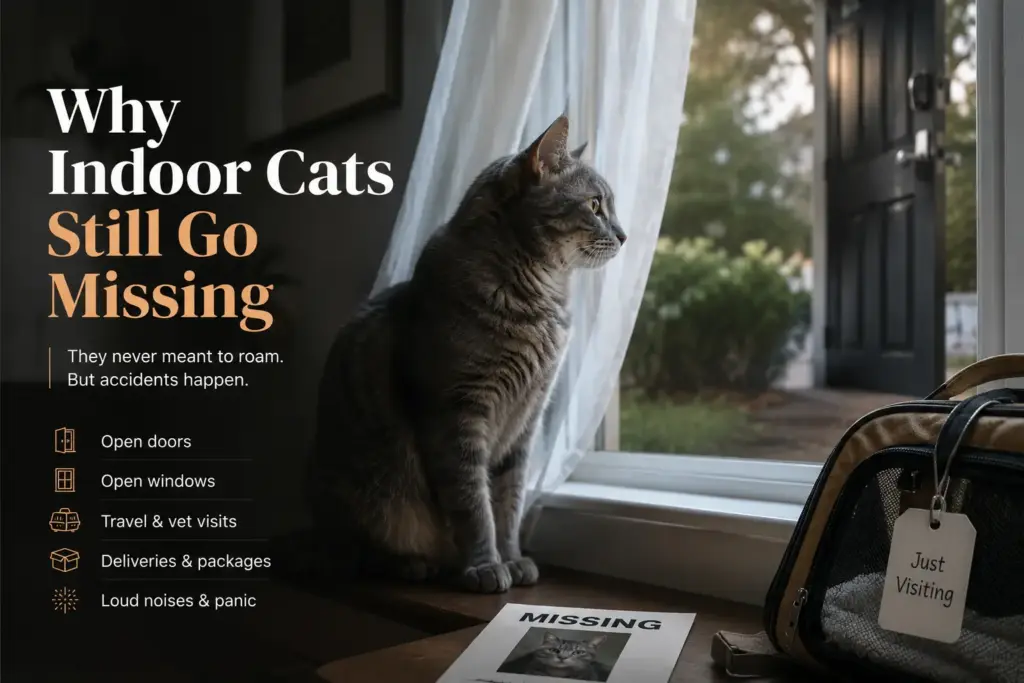
Why indoor cats still go missing surprises many owners. Indoor cats remain naturally curious. Instinct never disappears completely. Small opportunities create unexpected escapes. Fear changes behavior rapidly. Safe environments cannot remove natural instincts.
Curiosity drives exploration
Cats investigate new environments constantly. Open doors attract attention immediately. Unfamiliar sounds spark interest. Exploration begins without hesitation. Distance grows faster than expected.
Fear changes behavior instantly
A loud noise creates panic. Dogs, vehicles, or strangers increase stress. Fear pushes cats farther away. Confused animals lose direction quickly. Familiar paths become difficult to recognize.
Indoor cats lack outdoor experience
Outdoor environments feel overwhelming. Traffic creates confusion immediately. New scents distract attention. Large spaces increase uncertainty. Inexperience affects decision-making.
Most cats stay closer than owners expect
Many owners search too far away. Indoor cats often remain nearby. Hidden spaces feel safer. Garages, sheds, and bushes attract frightened cats. Close-range searches matter first.
Hiding becomes a survival strategy
Lost cats rarely roam openly. They avoid attention intentionally. Silence becomes protection. Hidden locations provide security. Searchers often walk past unnoticed.
Night changes behavior
Cats become more active after dark. Quiet surroundings reduce stress. Reduced activity feels safer. Movement often increases during nighttime hours.
Hunger eventually influences movement
Food becomes important over time. Hunger encourages exploration gradually. Cats begin expanding search areas. Survival needs shape behavior.
Weather affects lost cats
Rain pushes cats toward shelter. Heat reduces activity levels. Cold weather increases urgency. Environmental conditions influence movement patterns.
Why owners overlook nearby locations
Panic affects search decisions. Many expect long-distance travel. Hidden locations receive less attention. Nearby areas often hold answers.
Familiar scents create opportunities
Blankets help guide cats home. Favorite toys provide comfort. Familiar smells create direction. Scent-based strategies improve outcomes.
Common mistakes during searches
Owners call too loudly. Many search too widely. Others stop searching early. These mistakes reduce effectiveness.
Why understanding behavior matters
Behavior predicts likely locations. Search plans become more accurate. Knowledge improves recovery chances. Time gets used efficiently.
Conclusion
Why indoor cats still go missing reflects instinct and curiosity. Safe homes cannot remove natural behavior. Fear changes decisions quickly. Most lost cats stay closer than expected. Understanding behavior improves recovery outcomes. Every hour matters during searches.
Tags: abduction, abuse, America, donate, Florida, found, global issue, gps tracking, human trafficking, kidnapping, lost, Lost cat, nfound, nonprofit organizations