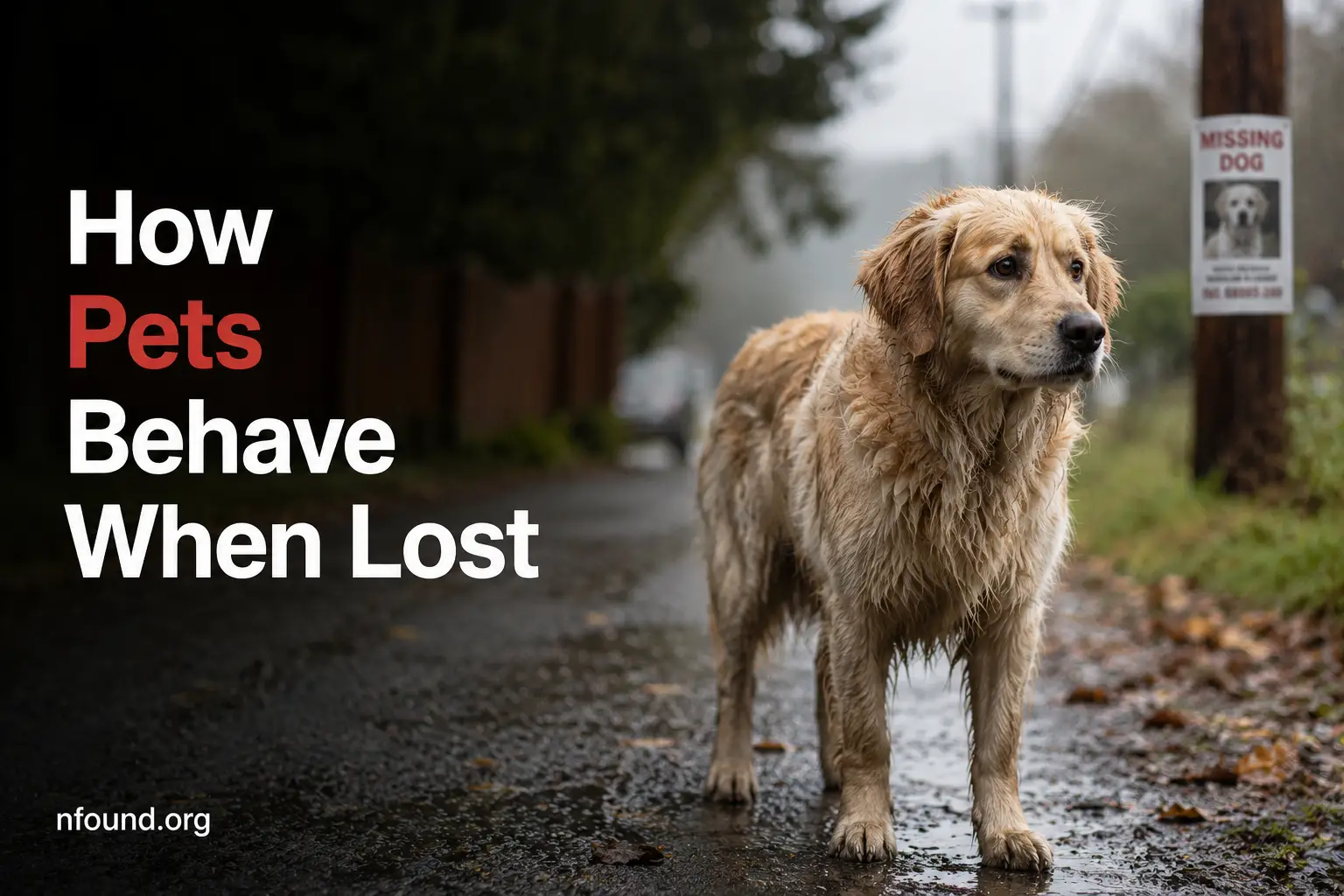
Missing pets. How Pets Behave When Lost becomes clear quickly. A gate stays open briefly. A loud sound creates panic instantly. A pet runs farther than expected. Familiar streets suddenly feel unfamiliar. Fear replaces confidence quickly. Movement becomes unpredictable.
How Pets Behave When Lost: the first reactions
Some animals keep moving constantly. Others hide silently nearby. Panic changes normal behavior quickly. Friendly pets may avoid people suddenly. Survival instincts take control.
Dogs often keep moving forward
Lost dogs usually travel continuously. Scent trails guide movement naturally. Roads and paths shape direction. Some dogs search for familiar smells. Others run from noise and fear.
Cats usually hide silently
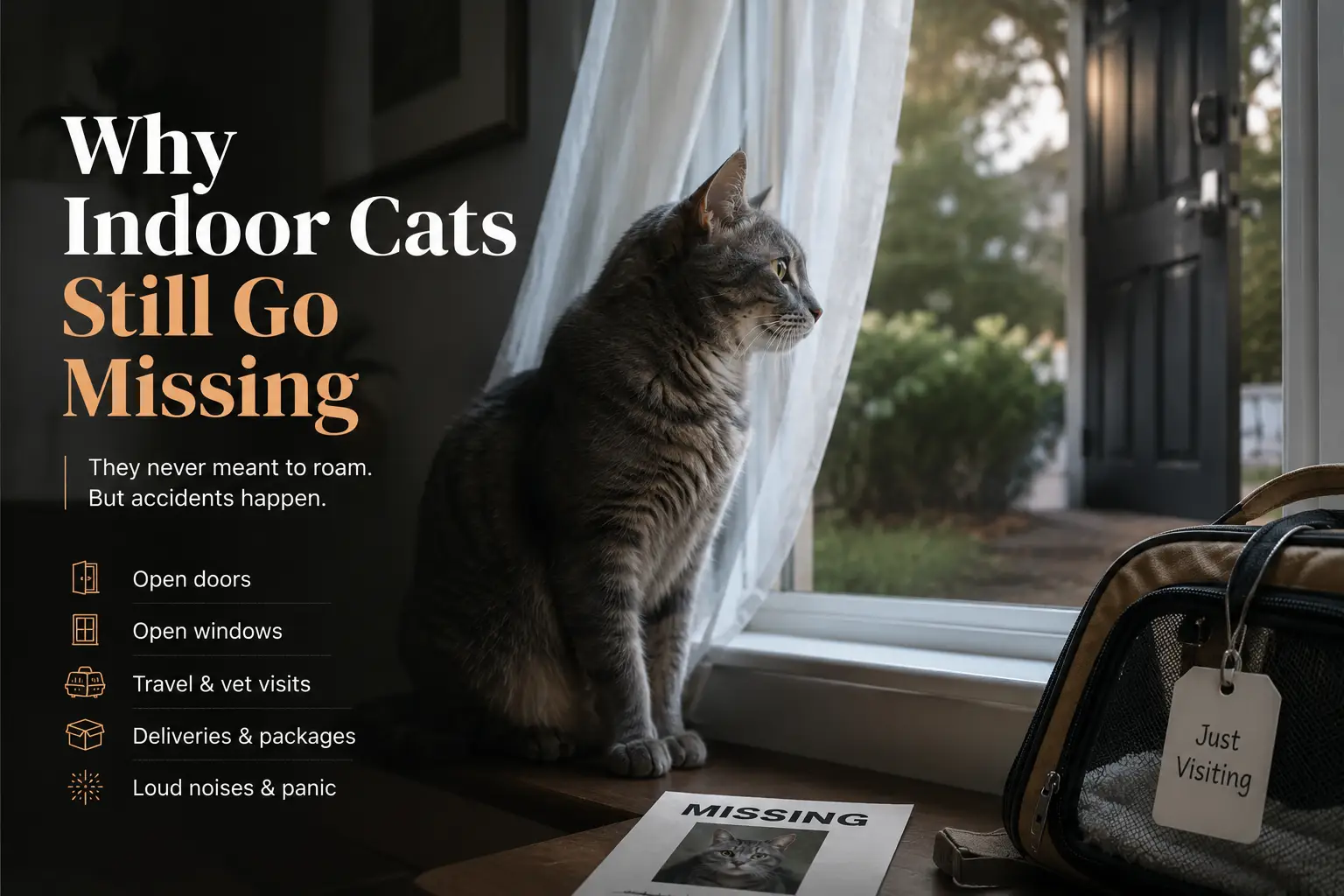
Lost cats behave differently from dogs. Most stay close initially. They hide under structures or bushes. Silence becomes their protection strategy. Fear keeps them hidden for days.
Fear changes recognition behavior
Many owners expect normal reactions. Lost pets often avoid familiar voices. Stress changes behavior dramatically. Panic overrides recognition temporarily.
Survival instincts take control
Hunger and fear shape decisions quickly. Pets search for shelter instinctively. Water sources attract movement. Quiet areas feel safer during stress.
Loud searching may create distance
Owners often call loudly outside. That noise may increase fear. Lost pets avoid chaotic environments. Calm searching works more effectively.
Pets often move more at night. Streets become quieter after dark. Reduced activity feels safer. Night searching increases chances sometimes.
Familiar scents create direction
Blankets and toys help significantly. Familiar smells guide pets homeward. Scent stations improve return chances.
Human interaction becomes unpredictable
Some pets approach strangers calmly. Others avoid all contact completely. Fear shapes interaction differently. Every animal responds uniquely.
Why understanding behavior matters
Search strategies depend on behavior patterns. Dogs require wider coverage usually. Cats need close-range searching first. Understanding improves recovery chances.
Common mistakes during searches
Owners search too loudly often. Many search too far initially. Others ignore hiding locations nearby. Panic reduces effectiveness quickly.
Conclusion
How pets behave when lost reflects instinct and survival. Fear changes normal behavior rapidly. Dogs travel differently from cats. Calm searching improves recovery outcomes. Understanding behavior saves valuable time.