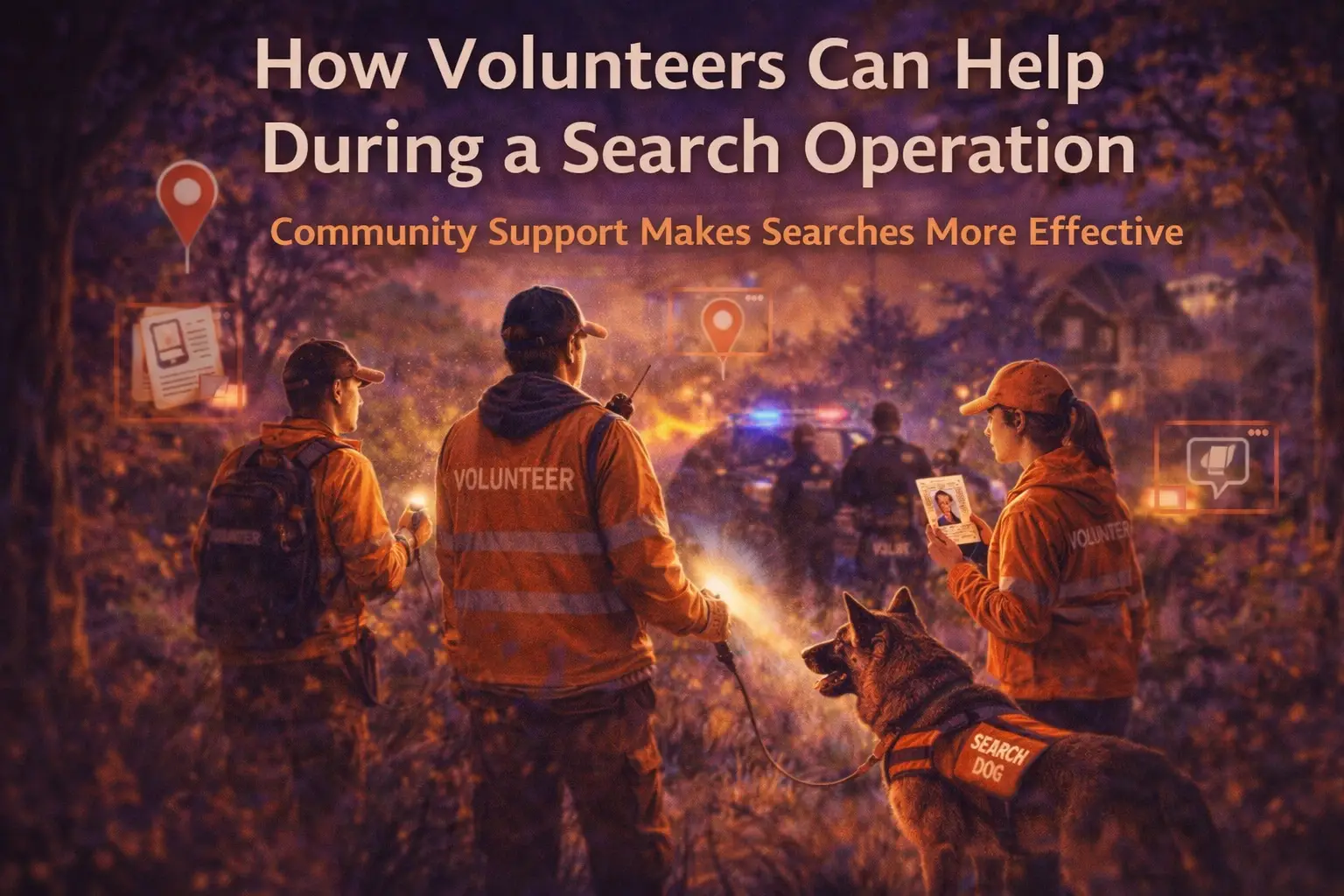
How volunteers can help during a search operation becomes clear immediately. A disappearance creates urgent demand for action. Families cannot search alone. Authorities need structured support. Volunteers fill critical gaps quickly. Time requires many eyes and hands.
How Volunteers Can Help : The first moments of involvement
Volunteers should never act independently. Search leaders define areas and roles. Instructions must remain clear and followed. Structure prevents confusion and risk.
Why organization matters
Search operations require discipline and precision. Random movement wastes valuable time. Teams must cover assigned zones carefully. Each area needs proper documentation. Overlapping searches reduce efficiency. Organized effort increases results.
Ground search responsibilities
Volunteers often join ground search teams. They walk assigned sectors slowly. Attention to detail remains critical. Footprints, clothing, or objects matter greatly. Small clues guide direction. Observations must be reported immediately.
Communication keeps operations effective
Clear communication supports every action. Volunteers must stay connected with coordinators. Radios or phones provide updates quickly. Information should remain accurate and brief. Miscommunication creates delays and confusion.
Supporting search teams indirectly
Not all volunteers search physically. Some assist with logistics and coordination. Food and water support teams in the field. Transportation helps cover larger areas. Organization roles remain equally important.
Helping with public awareness
Volunteers spread information quickly. Flyers increase visibility locally. Social media expands reach widely. Accurate descriptions must remain consistent. Public awareness generates valuable tips.
Working with law enforcement
Volunteers must respect authority guidance. Police define search priorities. Investigators manage evidence carefully. Volunteers should avoid interfering with official work. Cooperation strengthens outcomes.
Safety remains a priority
Search environments often present risks. Terrain may be difficult or unsafe. Weather conditions affect endurance quickly. Volunteers must follow safety instructions strictly. Personal safety supports effective searching.
What volunteers should avoid
Volunteers should not search alone. Independent actions create risk and confusion. They should not spread rumors. False information damages investigations. Respect for structure remains essential.
Emotional impact of search work
Search operations create emotional pressure. Volunteers witness difficult situations. Calm behavior supports team stability. Focus must remain on tasks.
Why volunteers make a difference
Many cases depend on volunteer support. More people increase search coverage. Faster coverage improves outcomes. Community involvement strengthens response.
The power of coordinated effort
How volunteers can help during a search operation depends on teamwork. Structure creates efficiency. Communication builds clarity. Discipline prevents mistakes.
Conclusion
How volunteers can help during a search operation reflects responsibility and action. Volunteers transform concern into real support. Organized effort accelerates search success. Every role contributes to progress. Every action carries value.