
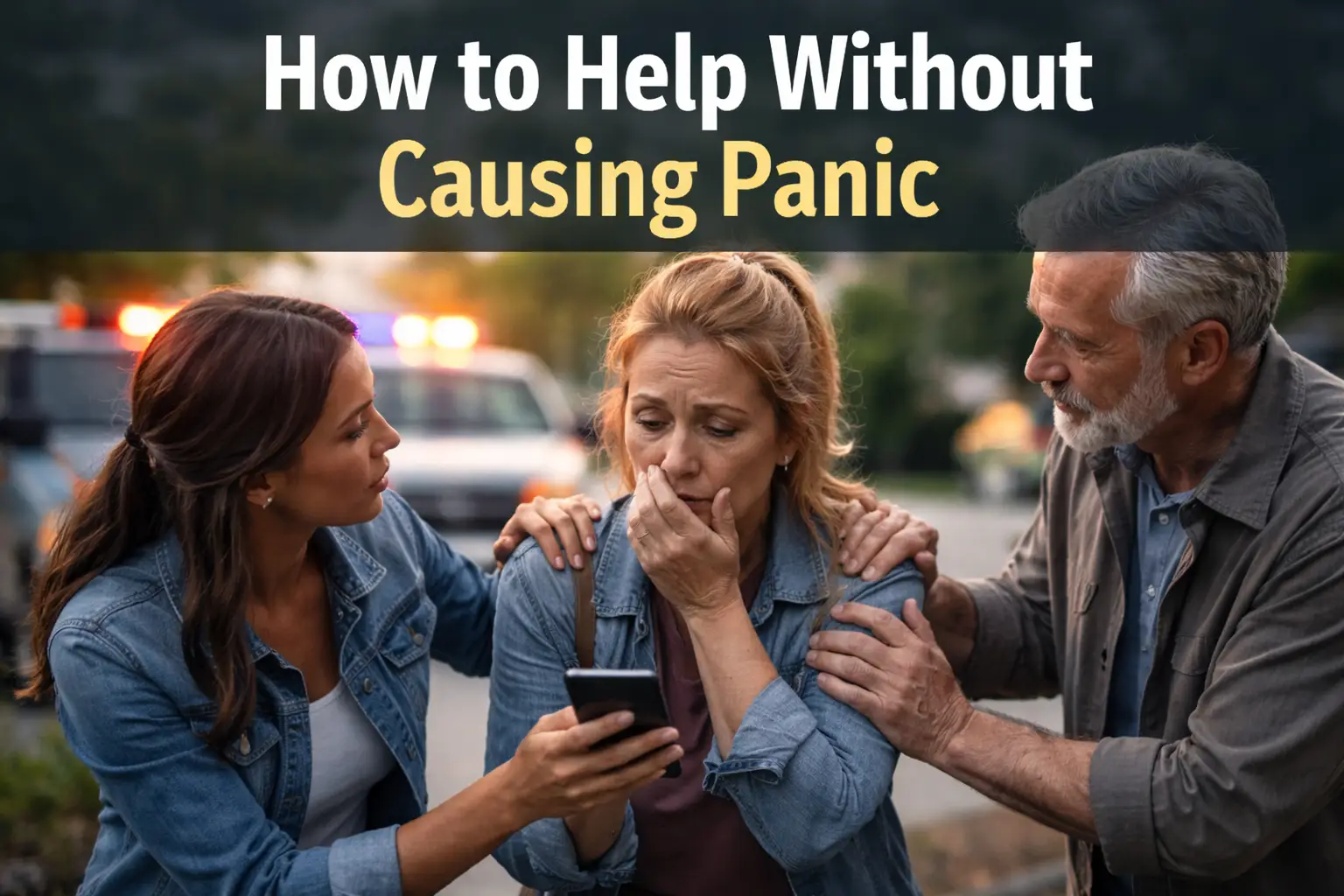
When urgency meets emotion
Missing person. How to help without causing panic becomes critical during crisis. A person goes missing suddenly. Fear spreads through family and community. Emotions rise quickly. Uncontrolled reactions create confusion. Calm action protects outcomes.
Help Without Causing Panic: Why panic damages response
Panic breaks structure immediately. People act without clear direction. Information becomes distorted quickly. Conflicting actions waste valuable time. Noise replaces useful signals. Clarity disappears under pressure.
The first response matters most
How to help without causing panic starts with control. Pause before reacting. Focus on verified facts only. Avoid spreading assumptions. Early discipline defines outcomes.
Share information carefully
Accurate information guides effective response. Incorrect details mislead search efforts. Repeat only confirmed facts. Keep descriptions clear and consistent. Simplicity improves understanding.
Control tone and language
Words influence emotional reactions strongly. Calm language reduces fear. Urgent tone must remain controlled. Avoid dramatic expressions. Clarity supports trust.
Avoid spreading rumors
Rumors spread faster than truth. Unverified claims damage search efforts. They distract attention from real leads. Always verify before sharing.
Focus on action, not fear
Direct attention toward helpful steps. Encourage observation and reporting. Provide clear instructions. Action replaces helplessness.
Coordinate with authorities
Follow official guidance strictly. Authorities manage information flow. Independent actions create confusion. Coordination improves efficiency.
Use social media responsibly
Posts must remain structured and clear. Avoid emotional overload. Include key details only. Remove unnecessary speculation. Visibility should remain useful.
Support families with stability
Families experience intense stress. Calm presence offers support. Avoid overwhelming them with noise. Provide clear updates only.
Encourage community awareness
Awareness increases visibility without panic. Clear messaging builds trust. People respond better to structured information.
Avoid overcommunication
Too many messages create confusion. Repetition without value distracts attention. Keep communication focused and relevant.
Why calm improves outcomes
Calm behavior maintains clarity. Clarity guides effective action. Structured response reduces mistakes. Stability increases success chances.
The balance between urgency and control
Urgency must not become chaos. Speed requires direction. Controlled action delivers results. Balance defines success.
Conclusion
How to help without causing panic requires discipline and clarity. Calm action protects search effectiveness. Clear communication guides community response. Structured effort replaces confusion. Every word carries impact.
#abduction #abuse #America #California #donate #found #global issue #human trafficking #kidnapping #lost #Missing Kids #missing people #nfound #nonprofit organizations #Sexual slavery