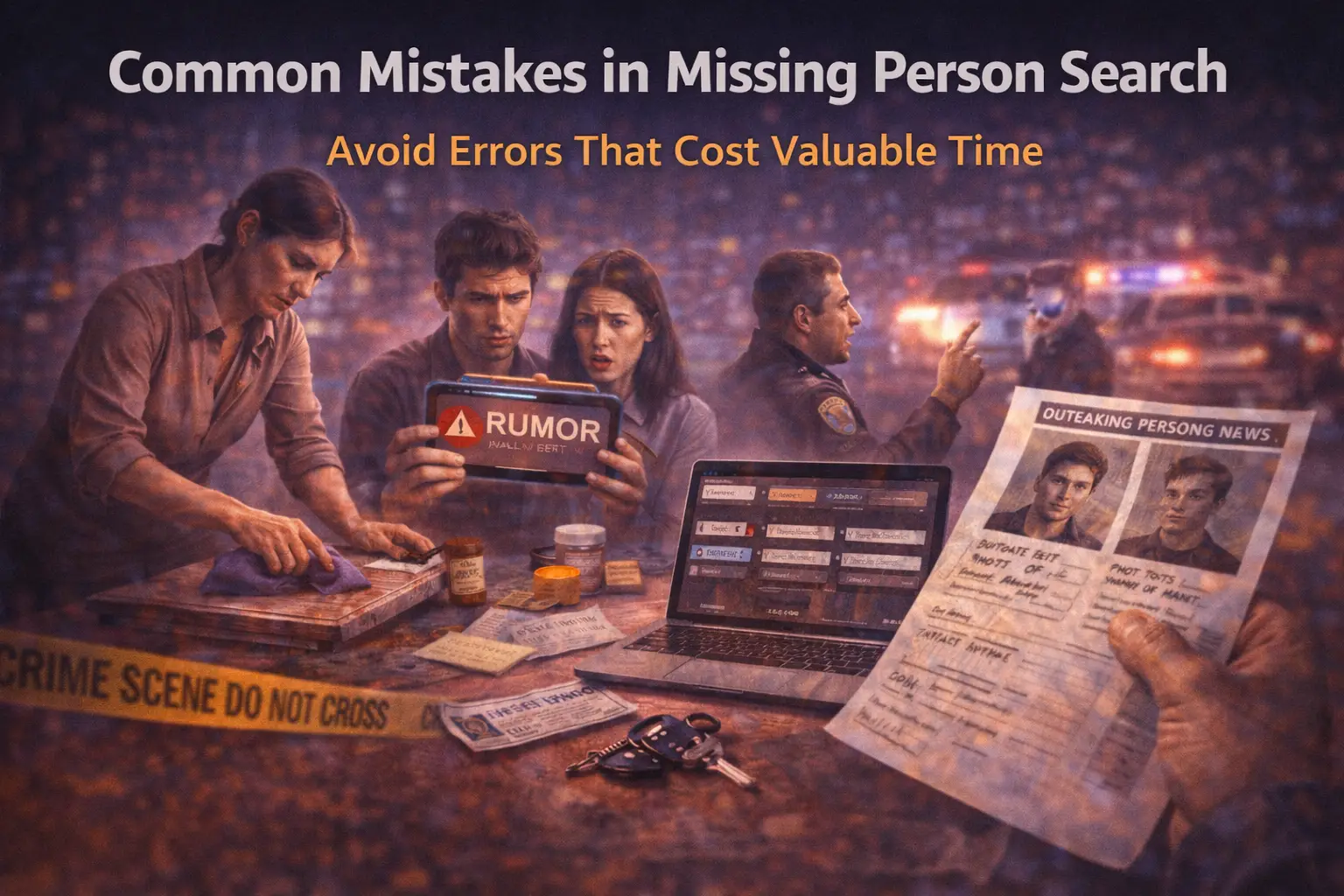
Common mistakes in missing person search cost time. Panic drives rushed decisions. Fear clouds judgment quickly. Families act without structure. Structure determines outcomes. Early errors shrink recovery chances.
Mistakes in Missing Person Search: Waiting too long to report
Many families hesitate reporting disappearances. They expect voluntary return. They fear embarrassment or overreaction. That delay benefits danger. Early reporting activates resources immediately. First hours matter most.
Cleaning or disturbing the scene
Loved ones often tidy living spaces. They move personal belongings unknowingly. They wash clothing or bedding. Those actions destroy evidence. Investigators lose critical traces. Preservation should come first.
Relying only on social media
Families post online immediately. Posts spread quickly but lack coordination. False leads flood comment sections. Rumors distort facts rapidly. Law enforcement must guide messaging. Digital awareness should support investigations.
Families sometimes avoid checking devices. They fear privacy violations. Valuable clues hide in phones. Location history disappears quickly. Messaging patterns reveal recent contacts. Digital evidence requires speed.
Ignoring last known timeline
Search efforts often scatter randomly. Random searching wastes energy. Investigators need structured timelines. Exact times anchor investigations. Movement patterns depend on accuracy.
Assuming voluntary disappearance
Adults sometimes leave temporarily. That assumption reduces urgency dangerously. Vulnerability does not depend on age. Circumstances change rapidly. Every case deserves full evaluation.
Confronting possible suspects
Emotions drive direct confrontation. Families accuse individuals publicly. That behavior escalates conflict. It also alerts potential offenders. Authorities must handle questioning professionally.
Refusing outside assistance
Some families resist volunteer coordination. Pride limits collaboration. Wider networks expand coverage. Organized volunteers support law enforcement. Cooperation multiplies effectiveness.
Vehicles move faster than people. License plates matter significantly. Security cameras track cars easily. Ignoring vehicle data limits reach.
Overlooking vulnerable risk factors
Medical conditions increase urgency. Mental health history changes strategy. Weather exposure raises danger. Ignoring risk factors slows response.
Letting fear silence communication
Some families withdraw emotionally. They stop answering calls. They avoid media engagement. Consistent communication maintains visibility.
Why structure prevents mistakes
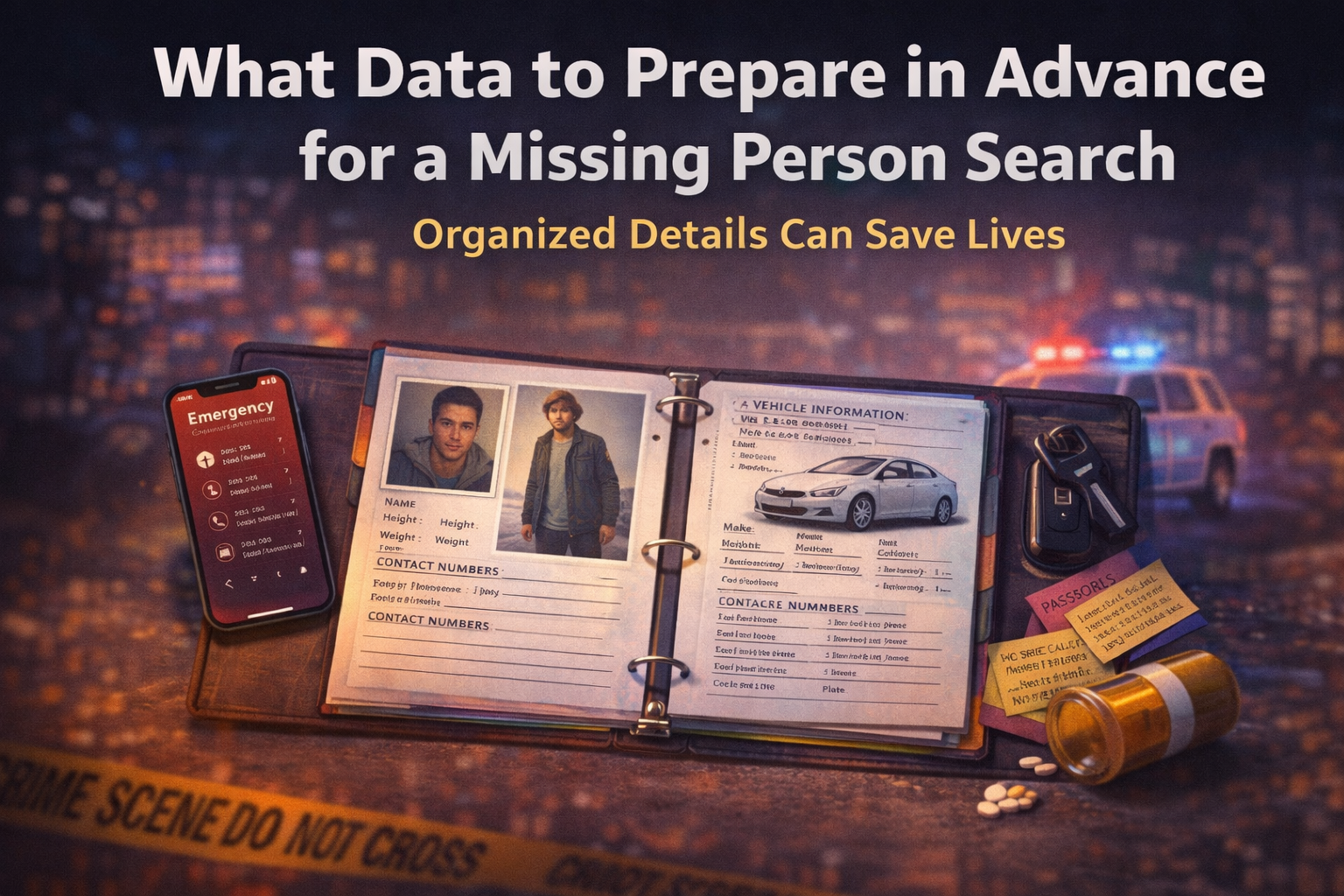
Clear plans reduce panic. Defined roles prevent duplication. Organized data accelerates response. Coordinated action improves outcomes.
Common mistakes in missing person search often stem from fear. Fear remains natural but dangerous. Calm structure replaces chaos. Early precision protects lives. Awareness prevents avoidable errors. Correct action increases safe return chances. Preparation strengthens response before crisis. Collaboration multiplies effectiveness during crisis. Every decision shapes outcome. Avoiding mistakes saves time. Time saves lives.