When urgency creates opportunity for fraud
Missing person. How to avoid scams during missing person cases becomes critical instantly. A loved one disappears suddenly. Fear spreads across family and community. Emotions rise quickly. Scammers notice vulnerability immediately. They exploit urgency and confusion. Fast thinking replaces careful judgment. That moment creates risk.
Scams During Missing Person Cases: Why scams appear
Crises attract manipulation quickly. Scammers target emotional situations. They promise fast results without proof. Some claim secret information. Others demand money for fake leads. Desperation weakens critical thinking. Trust becomes dangerous without verification.
The first warning signs
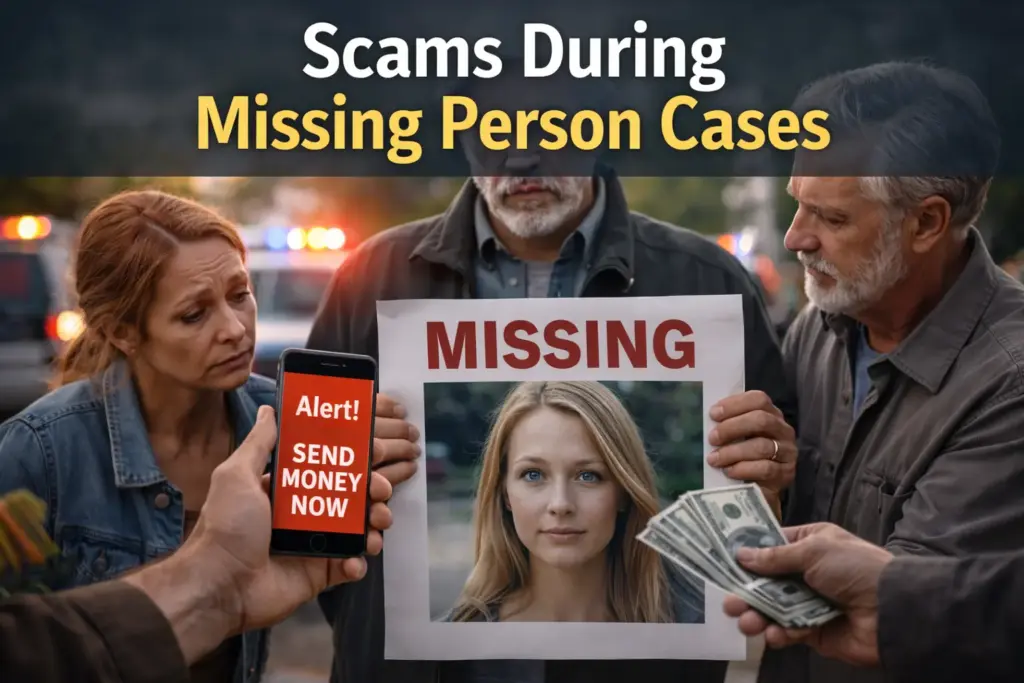
Scammers often contact families directly. They claim urgent knowledge immediately. Messages create pressure and fear. They demand quick payment. Real helpers never require instant money. Urgency signals possible fraud.
Requests for payment
Fraud often includes financial demands. Payments may appear as “search support.” Some request gift cards or transfers. Others ask for cryptocurrency. Legitimate services do not operate this way. Payment requests signal danger.
False information and fake leads
Scammers provide vague details intentionally. Information lacks clear evidence. They avoid specific locations or times. False leads waste valuable time. Time matters during real searches.
Impersonation of authorities
Some scammers pretend to be officials. They use fake names or badges. Calls may sound convincing. Always verify identity independently. Contact official numbers directly.
Social media manipulation
Scammers monitor public posts actively. They use shared details against families. Fake accounts send direct messages. Emotional language creates urgency. Always verify profiles carefully.
Why verification matters
Verification protects search efforts. Confirm every source independently. Cross-check information with authorities. Real leads withstand verification. False leads collapse quickly.
Controlling communication
Limit information shared publicly. Avoid posting sensitive details. Share only necessary facts. Controlled communication reduces risk. Clarity protects families.
Working with authorities
Police manage verified information. Report suspicious contacts immediately. Authorities track fraudulent activity. Coordination improves safety and efficiency.
Avoid emotional decisions
Fear drives poor decisions quickly. Pause before responding to messages. Analyze information carefully. Calm thinking prevents mistakes.
Community awareness
Educating communities reduces fraud impact. People recognize warning signs faster. Awareness limits scam success. Shared knowledge protects others.
Common mistakes
Families often trust too quickly. They respond without verification. They share too much information. These actions increase risk significantly.
Why structure protects
Structured response prevents chaos. Clear roles improve communication. Verification becomes routine. Discipline reduces vulnerability.
Conclusion
How to avoid scams during missing person cases requires awareness and control. Scammers exploit fear and urgency. Verification protects valuable time. Calm decisions prevent loss. Structured action supports real search efforts. Every decision carries impact.
Tags: abduction, abuse, America, California, donate, found, global issue, human trafficking, kidnapping, lost, Lost cat, lost dog, Missing Kids, missing people, nfound, nonprofit organizations