Missing pets.Common mistakes when searching for lost pets begin with panic. A pet disappears without warning. Owners react emotionally first. Fear drives rushed decisions. Structure disappears quickly. Time starts working against recovery. Early mistakes reduce chances significantly.
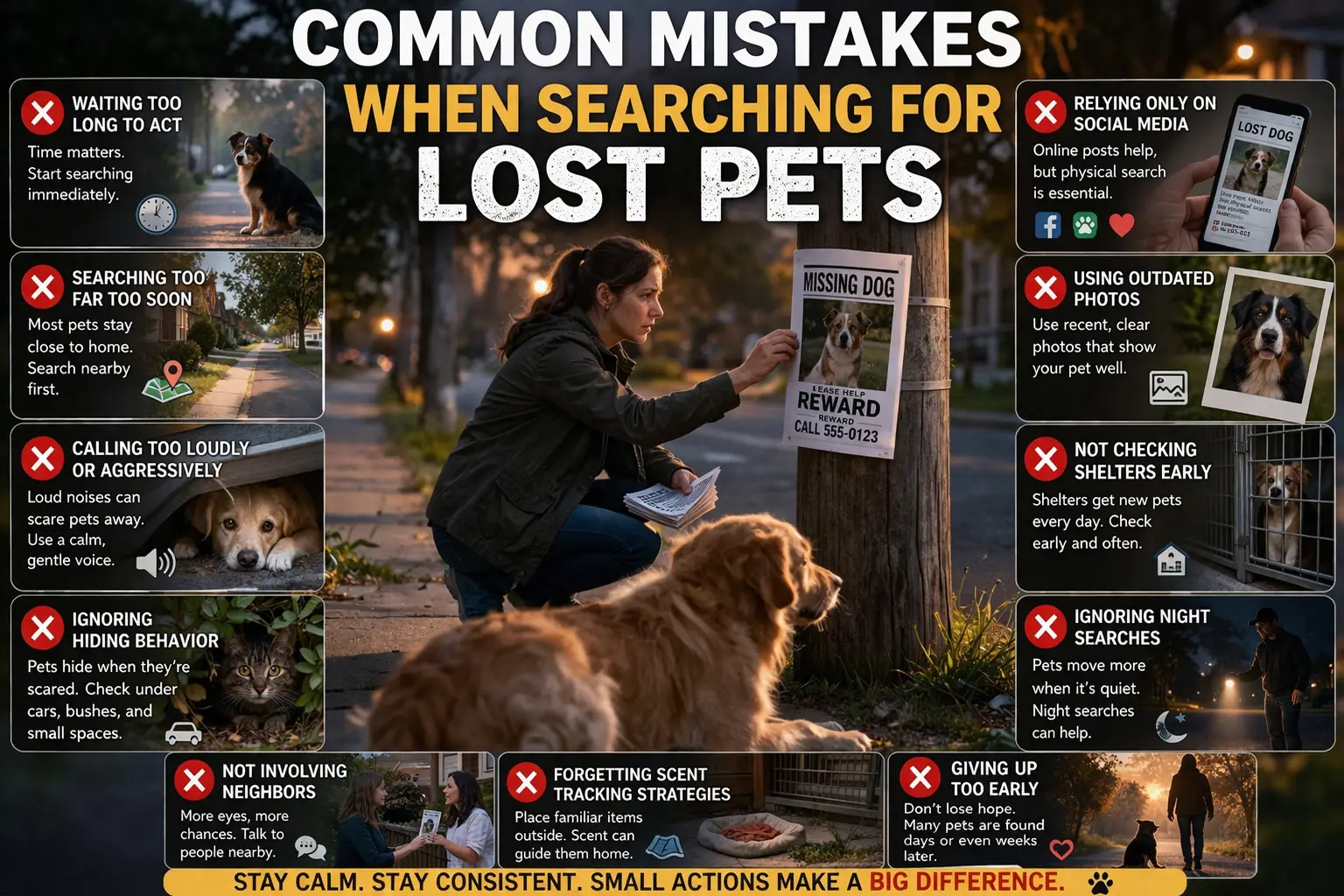
Lost Pets: Waiting too long to act
Many owners expect pets to return. They delay searching for hours. Hope replaces action early. That delay increases distance. Pets keep moving constantly. Early search improves recovery odds.
Searching too far too soon
Owners often search distant areas immediately. They assume pets travel far quickly. Most pets stay nearby first. Familiar territory feels safer. Close areas require careful attention. Distance searches waste time early.
Calling too loudly or aggressively
Loud shouting can scare animals further. Fear causes pets to hide silently. Calm calling works better. Familiar tones encourage approach. Panic creates distance instead of reunion.
Ignoring hiding behavior
Lost pets often hide quietly. They stay under cars or bushes. They avoid open spaces during fear. Owners overlook hidden areas easily. Slow searching reveals hidden animals.
Relying only on social media
Online posts spread information quickly. Many owners depend on posts alone. Physical searching remains essential. Flyers reach local witnesses faster. Direct visibility increases recovery chances.
Using outdated photos
Old photos confuse recognition. Appearance may change over time. Recent images improve accuracy. Clear photos help neighbors identify pets quickly.
Not checking shelters early
Shelters receive found pets daily. Owners often delay checking them. Early visits improve recovery chances. Staff may recognize descriptions quickly.
Ignoring night search opportunities
Pets move more during quiet hours. Night reduces noise and distractions. Searching at night improves detection. Owners often avoid searching then.
Not involving neighbors
Neighbors often notice unusual animals. Many owners search alone. Community support expands coverage. More eyes increase chances quickly.
Forgetting scent tracking strategies
Pets follow familiar scent trails. Owners should place familiar items outside. Blankets or toys attract pets. Scent creates direction for return.
Giving up too early
Searches require persistence. Many owners stop after few days. Pets may survive longer. Continued effort increases recovery chances.
Why structure improves results
Organized searching saves time. Defined areas prevent duplication. Clear strategy improves efficiency. Calm actions guide better outcomes.
The role of awareness
Public awareness increases visibility. Consistent information prevents confusion. Clear communication builds trust. Trust brings useful tips.
Conclusion
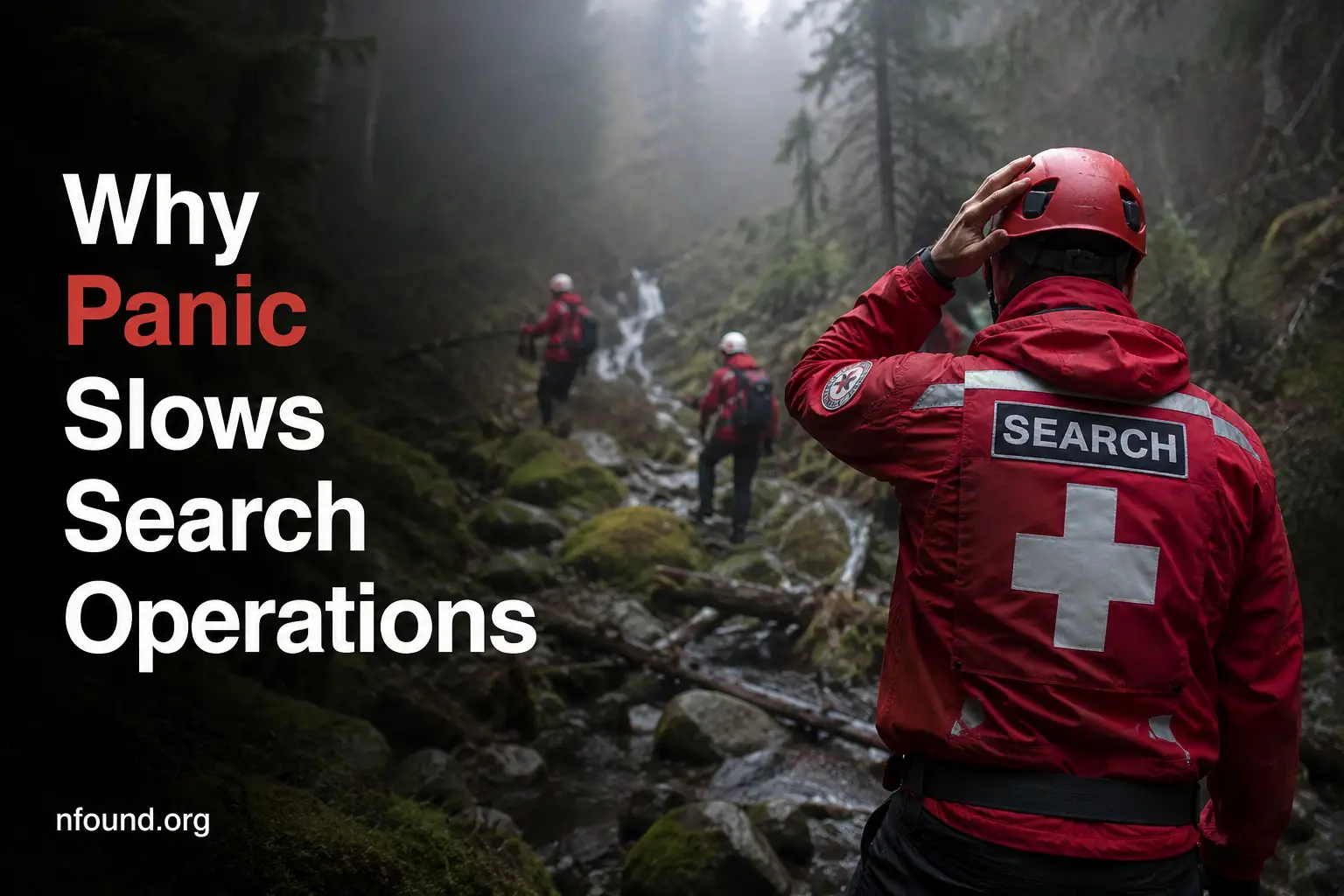
Panic creates ineffective actions. Calm structure improves results. Early action saves time. Time saves lives. Small corrections change outcomes significantly.