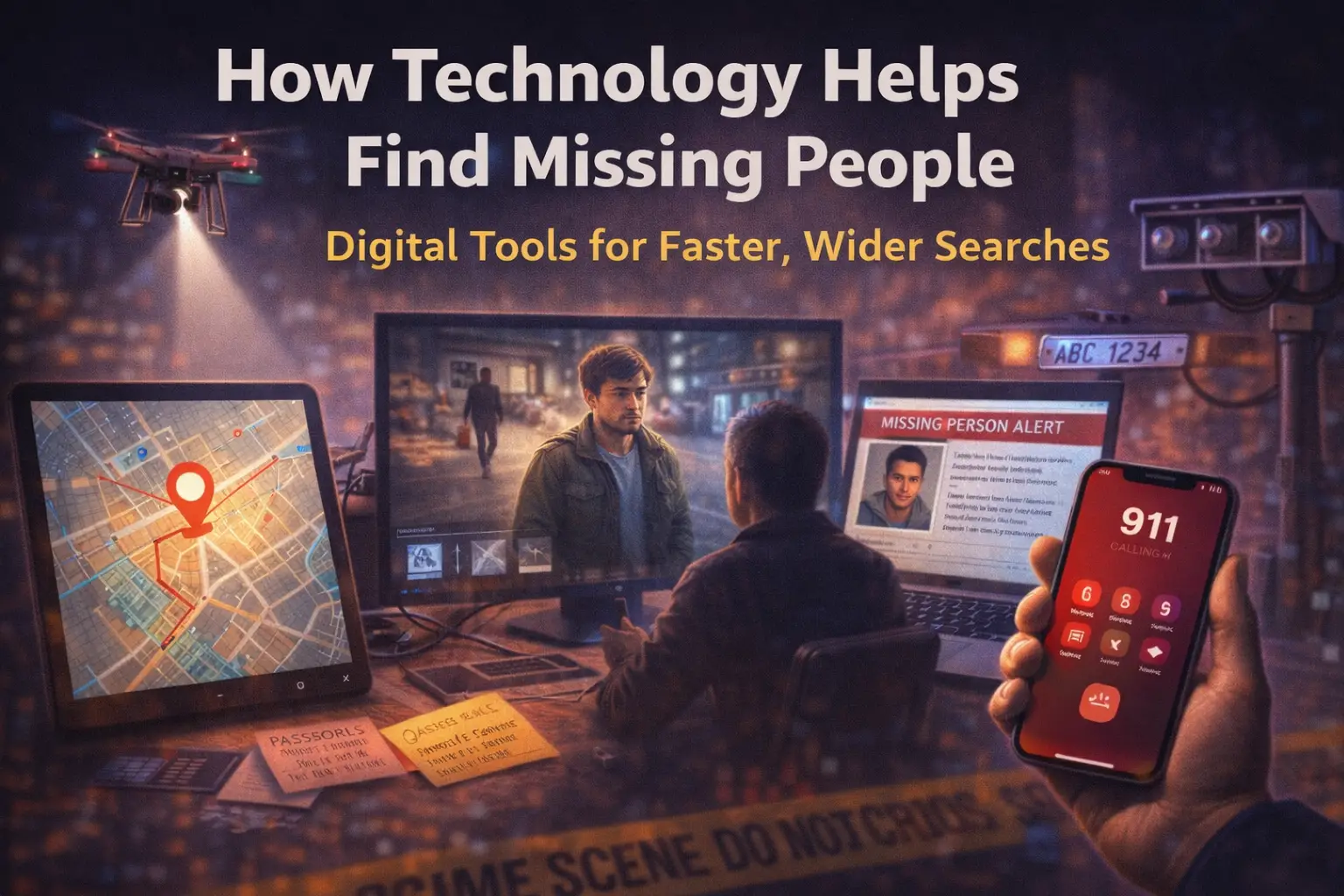
How technology helps find missing people changes outcomes dramatically. Disappearances once meant blind searching. Today, digital tools create direction instantly. Data replaces guesswork quickly. Signals reveal movement patterns. Information travels faster than fear. Technology shortens uncertainty.
Modern devices transmit real-time coordinates. Smartphones log movement automatically. Wearables record travel paths silently. Parents track children through secure apps. Search teams map last known points. GPS reduces search radius dramatically. Early signals save critical hours.
Mobile phones leave digital footprints
Phones store recent calls and messages. Towers record connection points precisely. Location history reveals travel routes. Messaging apps track active sessions. Deleted devices still leave traces. Investigators follow data trails quickly.
Surveillance cameras multiply visibility
Cities contain thousands of cameras. Stores capture entrances continuously. Traffic systems log passing vehicles. Doorbell cameras expand neighborhood coverage. Footage preserves moments before disappearance. Images guide search direction.
Social media accelerates public awareness
Posts spread information within minutes. Images reach thousands instantly. Witnesses recognize faces online. Community groups amplify alerts rapidly. Digital sharing replaces printed flyers. Visibility drives tips forward.
License plate recognition systems
Highway cameras scan passing vehicles. Databases match registered numbers. Movement across regions becomes traceable. Travel patterns emerge clearly. Automated alerts notify authorities instantly.
Drones expand physical search capacity
Search teams deploy drones quickly. Thermal cameras detect body heat. Forest areas become searchable efficiently. Water surfaces reveal disturbances. Aerial perspective speeds coverage dramatically.
Missing person cases enter centralized systems. Agencies share records across states. Photos remain accessible nationwide. Alerts synchronize across jurisdictions. Coordination prevents information gaps.
Real-time alert systems
Emergency notifications reach nearby phones. Geographic targeting narrows audiences. Drivers receive highway alerts immediately. Community members respond faster. Technology activates local awareness instantly.
Wearable medical identification
Smart bracelets store health data. QR codes link to emergency contacts. Medical alerts inform responders instantly. Identification speeds reunification.
Technology guides direction. People confirm and respond physically. Bystanders still report sightings. Families provide context. Cooperation completes the process.
The transformation of search
Searching once relied on manpower alone. Today, digital networks multiply reach. Cameras replace blind corners. Data replaces assumption. Connectivity replaces isolation.
How technology helps find missing people reflects a shift in capability. Information now travels faster than disappearance. Signals reveal patterns quickly. Systems coordinate across borders. Digital tools turn uncertainty into direction. Technology does not replace humanity. It strengthens it.