How Elderly People With Dementia Move When Lost
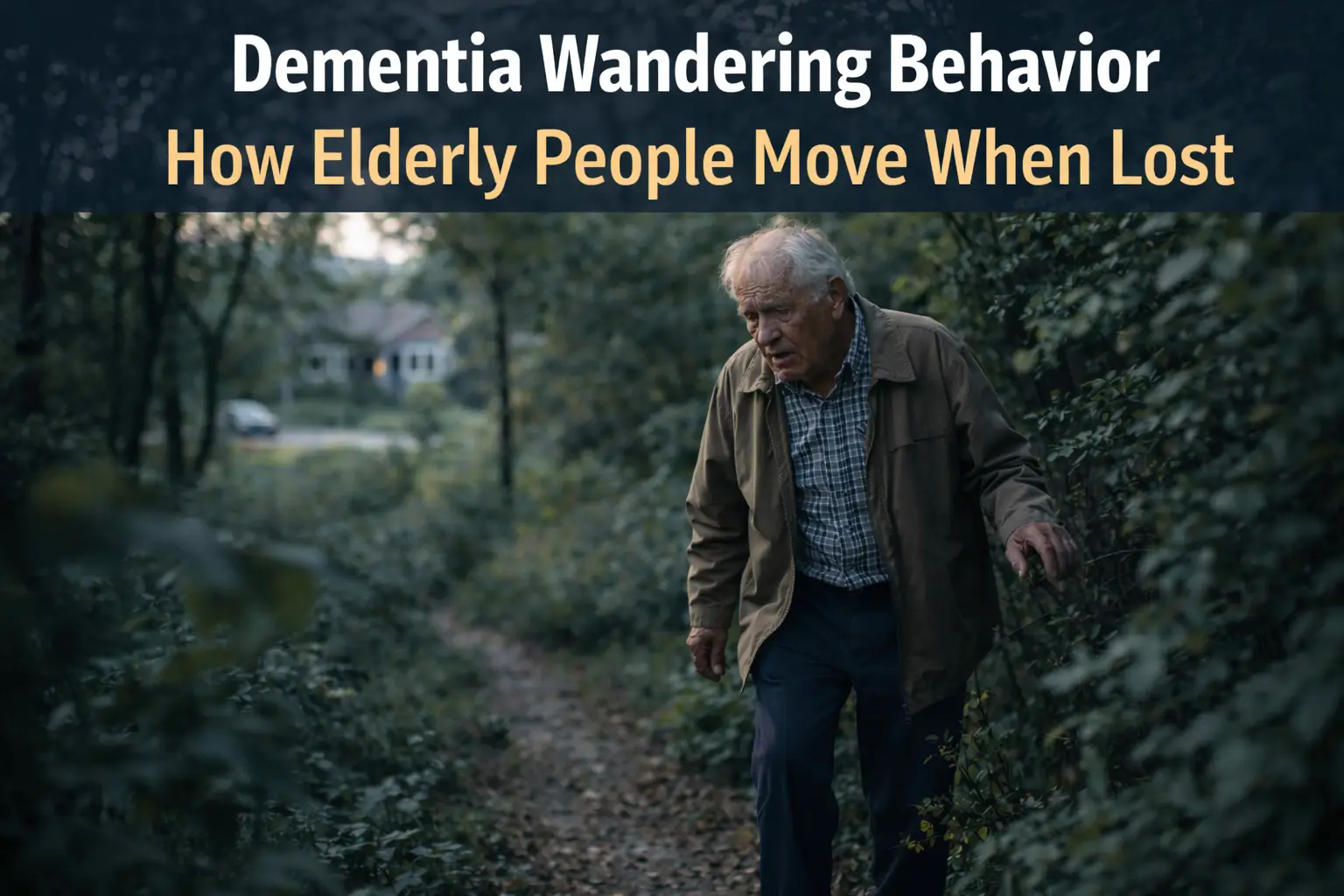
When direction suddenly disappears
Missing people. How elderly people with dementia move when lost becomes critical knowledge. A routine walk can change instantly. Familiar streets lose meaning quickly. Landmarks no longer guide movement. Confusion replaces direction. Movement continues without clear purpose.
People With Dementia: Why dementia changes movement patterns
Memory loss affects spatial awareness strongly. Past routines mix with present confusion. A person may seek a previous home. That home may no longer exist. Old habits guide new movement. Logic does not control direction.
The first steps after wandering
How elderly people with dementia move when lost often starts simply. A person leaves a familiar place. Walking begins slowly and calmly. No urgency appears at first. Movement follows instinct, not plan.
Movement often stays linear
Many individuals walk in straight paths. They continue forward without turning back. Obstacles may not change direction. Roads, sidewalks, and paths guide movement. Linear travel increases distance quickly.
Attraction to familiar routes
Past routines influence direction strongly. A person may walk toward former workplaces. Old homes attract attention. Religious places or shops may feel familiar. Memory fragments shape decisions.
Limited ability to ask for help
Communication becomes difficult during confusion. Individuals may avoid strangers. Fear reduces interaction. They may not explain their situation clearly. This limits chances of quick help.
Tendency to hide or rest
Fatigue affects movement quickly. Individuals may sit or lie down. Hidden areas provide a sense of safety. Bushes, benches, or quiet spaces become resting points.
Attraction to water and open spaces
Water sources often attract wandering individuals. Lakes, rivers, or ponds create risk. Open fields or parks also attract movement. These areas require immediate attention.
Night movement increases danger
Disorientation worsens during darkness. Visibility decreases significantly. Risk of injury increases quickly. Movement becomes slower but more dangerous.
Why time matters in search
Early hours provide best chances. Movement remains limited initially. Distance increases with time. Quick action reduces search area.
How search teams should respond
Search teams should focus nearby first. Linear paths require careful tracking. Water areas must be checked early. Familiar locations need immediate attention.
Common mistakes in search strategy
Searching too far wastes time early. Ignoring linear movement delays results. Delayed response increases risk significantly.
Why awareness improves outcomes
Understanding behavior improves search efficiency. Predictable patterns guide strategy. Knowledge reduces uncertainty. Action becomes more precise.
The role of community
Community awareness increases visibility quickly. People notice unusual behavior. Early reporting improves recovery chances.
Conclusion
How elderly people with dementia move when lost reflects confusion and instinct. Movement follows patterns, not logic. Linear travel increases distance quickly. Early search saves lives. Knowledge transforms response into action.