When details become a problem
Missing person. Why too much information can slow a search becomes clear during crisis. A person goes missing suddenly. People start sharing everything they know. Messages multiply quickly. Details flood communication channels. Clarity begins to disappear. Search efforts lose direction.
Why Too Much Information Can Slow a Search: the hidden risk
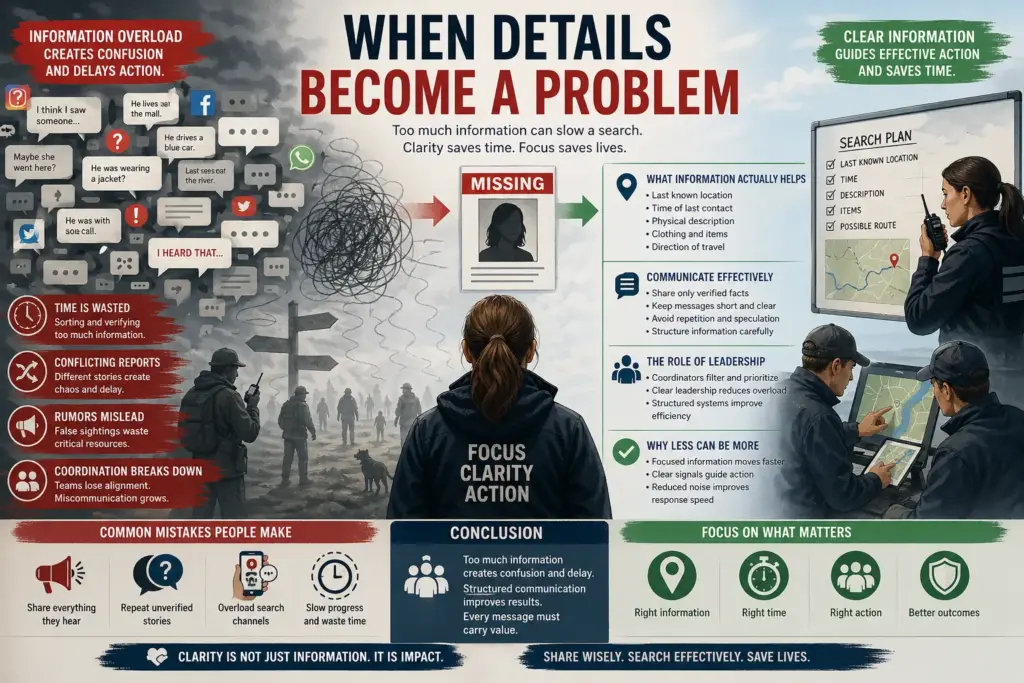
Why too much information can slow a search links to overload. Not all details hold equal value. Irrelevant data mixes with critical facts. Important clues become harder to find. Noise replaces useful signals. Time gets wasted sorting information.
The danger of information overload
Too many messages create confusion quickly. Search teams receive constant updates. Many reports repeat the same details. Others include speculation. Filtering becomes slow and difficult. Critical time slips away.
Conflicting information creates chaos
Different versions of events appear often. Witnesses remember details differently. Some reports contradict others. Teams must verify everything carefully. That process delays action.
Unverified details mislead search efforts
Rumors spread faster than facts. Social media amplifies uncertainty. False sightings send teams in wrong directions. Resources get wasted quickly.
Why clarity matters more than volume
Clear information guides effective action. Short descriptions improve understanding. Focused details help recognition. Precision saves time.
The impact on coordination
Search operations require structure. Too much data breaks coordination. Teams lose alignment quickly. Miscommunication increases risk.
How social media contributes
People share information without verification. Posts spread widely and instantly. Emotional messages add confusion. Useful details become harder to isolate.
What information actually helps
Time, location, and description matter most. Last known movement provides direction. Physical appearance supports recognition. These details guide search strategy.
How to communicate effectively
Share only verified facts. Keep messages short and clear. Avoid repeating unnecessary details. Structure information carefully.
The role of leadership
Coordinators manage information flow. They filter useful data quickly. Clear leadership reduces overload. Structured systems improve efficiency.
Common mistakes people make
People share everything they hear. They repeat unverified stories. They overload search channels. These actions slow progress.
Why less can be more
Focused information moves faster. Clear signals guide action. Reduced noise improves response speed. Simplicity strengthens outcomes.
Conclusion
Excess details create confusion and delay. Structured communication improves results. Every message must carry value.
Tags: abduction, abuse, America, donate, found, global issue, human trafficking, kidnapping, lost, Lost cat, lost dog, Missing Kids, missing people, nfound, nonprofit organizations, Sexual slavery