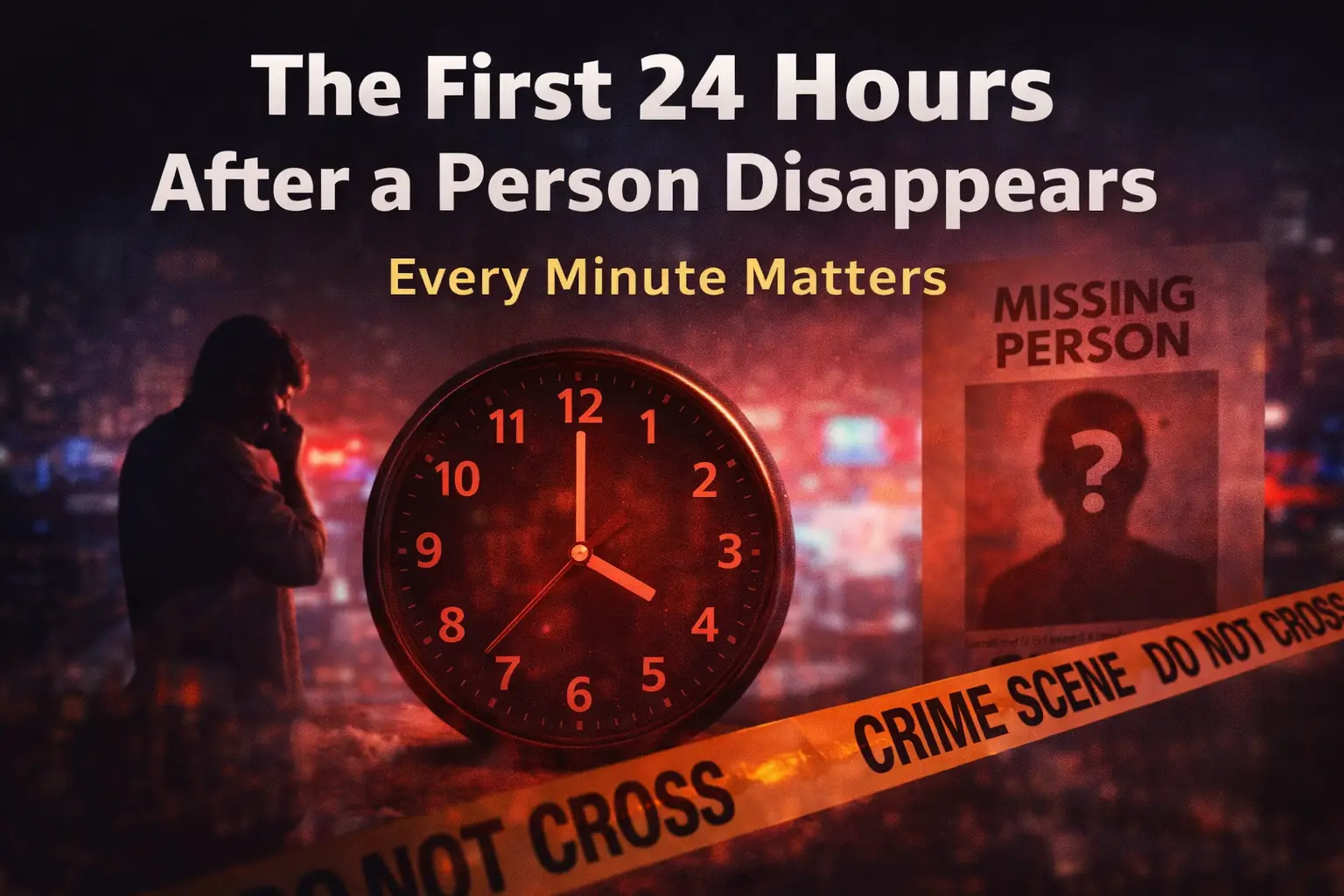
The First 24 Hours After a Person Disappears: Why Every Minute Matters
When normal life suddenly fractures
A disappearance rarely begins with chaos. It starts quietly and without warning. Life follows routine until one moment breaks it. Messages remain unread longer than usual. Calls go unanswered without explanation. Familiar silence begins feeling dangerous. Instinct reacts before logic can respond. That feeling should never be ignored. The clock becomes the most dangerous enemy.
The First 24 Hours After a Person Disappears: The moment concern becomes urgency
At first, people search for reasonable explanations. Maybe the phone battery died. Perhaps plans changed unexpectedly. Those explanations fade quickly with time. Anxiety grows with every passing minute. Doubt turns into fear silently. Experience shows hesitation costs lives. Early action always improves outcomes. Waiting rarely brings answers.
Why the first day decides everything
The first twenty-four hours shape the entire case. Movement happens fastest during early hours. Trails remain fresh and visible. Witness memories stay clearer then. Surveillance footage still exists. Digital signals leave temporary traces. Each hour removes another opportunity. Speed multiplies chances of safe recovery.
How people actually disappear
Most missing cases involve ordinary decisions. Someone leaves for a short errand. Another steps outside briefly. Plans feel simple and harmless. Something interrupts the expected return. Accidents happen quickly. Encounters turn dangerous unexpectedly. Time rarely allows preparation.
The danger of assumptions
Families often hesitate to alarm authorities. Fear of embarrassment delays reporting. Hope convinces people to wait longer. That delay creates distance and risk. Criminal cases benefit from hesitation. Nature also works against delays. Weather erases evidence quickly. Urban movement hides people fast.
What should happen immediately
The search must start without delay. Loved ones should document last contacts. Clothing descriptions matter early. Recent photos help recognition. Phone records guide movement patterns. Social media activity offers clues. Every detail builds a timeline. Accuracy matters more than perfection.
Why community awareness saves lives
One person rarely notices everything. Communities notice patterns together. Shared information travels faster than individuals. Witnesses often doubt their observations. Public alerts validate those memories. Tips usually appear after sharing. Silence prevents recognition completely.
Law enforcement timing matters
Police resources activate faster during early reporting. Patrol routes adjust immediately. Cameras get reviewed sooner. Border alerts activate faster. Data remains available briefly. Delays limit investigative tools. Cooperation strengthens early momentum.
The emotional reality for families
Waiting feels physically painful. Time slows unnaturally. Sleep becomes impossible. Phones remain constantly nearby. Every sound creates brief hope. Silence returns again and again. Support becomes essential for survival. Awareness offers families strength.
A missing person could be nearby. Ordinary places hide extraordinary situations. One observation may matter greatly. A parked car can hold answers. A conversation may trigger recognition. Trust instincts calmly and responsibly.
Why hope still exists
Many disappearances end safely. Early action creates that possibility. Community effort changes endings. Persistence brings answers surprisingly often. Awareness transforms outcomes quietly.
The first twenty-four hours after disappearance decide futures. Action during that window saves lives. Delay removes options permanently. Attention creates movement toward safety. Every minute matters more than comfort. Acting early gives someone a chance home.